
10
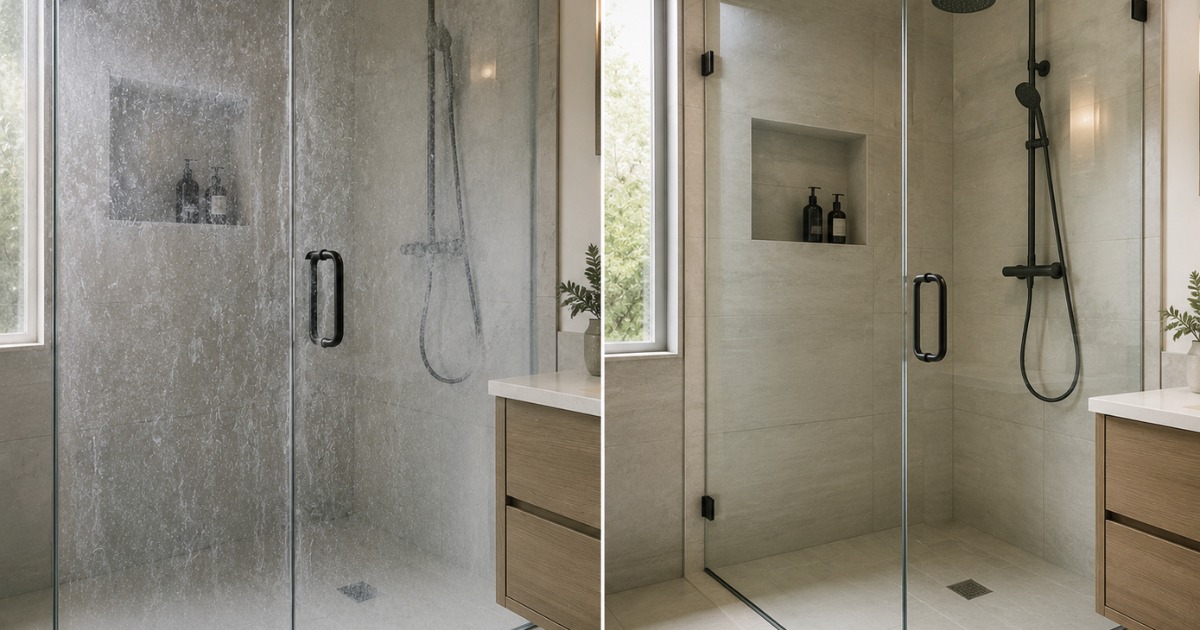
Few things in a bathroom look as frustrating as a glass shower door covered in a chalky, cloudy film. You can spray an entire bottle of standard glass cleaner, scrub until your arms ache, and wipe the surface dry, only to watch the milky spots reappear the moment the glass dries completely.
The reason typical glass cleaners fail is simple: hard water stains are not dirt. Blue window sprays are engineered to dissolve skin oils, airborne grease, and surface dust. Hard water stains, by contrast, are mineral scales that form an inorganic crystalline bond with the silica in your shower door. Removing them requires a targeted chemical and mechanical approach rather than brute force.
With the right understanding of glass chemistry and a systematic cleaning protocol, you can dissolve years of stubborn buildup, restore optical clarity, and seal the surface so the problem never returns.
Understanding What You Are Actually Fighting: Scale vs. Etching
Before reaching for any cleaning supplies, you need to determine whether you are dealing with mineral scale or permanent glass etching. While they look nearly identical from a distance, their structural realities are entirely different.
When municipal tap water or well water contains elevated levels of dissolved calcium and magnesium bicarbonate, it leaves behind microscopic drops every time you shower. As the water evaporates under bathroom heat, these dissolved minerals precipitate out of the liquid and crystallize into calcium carbonate and magnesium silicate. Over weeks and months, these deposits build up in concentric, overlapping rings.
To the naked eye, float glass seems completely smooth and nonporous. Under a microscope, however, glass features an uneven landscape of microscopic pits, peaks, and valleys. Left to sit in a warm, moist environment, alkaline water deposits begin to react chemically with the silica network of the glass. Over time, this reaction can cause silica etching, where minerals leach ions from the glass surface, physically corroding tiny craters into the pane.
Surface scale can always be dissolved and scrubbed away. Permanent etching, on the other hand, is physical structural damage that requires specialized abrasive polishing to improve. The sooner you treat mineral buildup, the lower the risk that those spots will turn into permanent glass corrosion.
Everyday Household Solutions for Mild to Moderate Buildup
If your shower doors have developed a hazy sheen over the past few weeks or months, gentle acids are usually enough to dissolve the bonds holding the calcium carbonate together.
The Heated Vinegar and Surfactant Method
Standard white distilled vinegar contains roughly five percent acetic acid, which dissolves alkaline mineral salts on contact. However, spraying straight vinegar on vertical shower glass rarely works because the liquid immediately sheets down into the drain before it has time to break down the minerals.
To create an effective treatment, mix equal parts distilled white vinegar and liquid dish soap in a microwave-safe bowl. Heat the mixture for thirty to forty-five seconds until it is warm to the touch, then pour it into a clean spray bottle. The dish soap acts as a surfactant and thickening agent, allowing the acidic vinegar to cling vertically to the glass pane rather than running off.
Coat the entire shower door thoroughly and allow the solution to sit undisturbed for at least twenty to thirty minutes. This dwell time is where the actual chemical breakdown occurs; scrubbing too early simply wastes physical energy. After the dwell period, wipe the glass down using a clean microfiber cloth in circular motions, rinse completely with warm water, and dry the surface immediately with a silicone squeegee.
The Citric Acid Alternative
For homeowners sensitive to the pungent smell of warm vinegar, food-grade citric acid is an exceptional alternative. Citric acid is an organic acid derived from citrus fruits and is readily available as a dry powder. It operates as a powerful chelating agent, binding to positively charged calcium and magnesium ions and converting them into water-soluble compounds.
Dissolve two tablespoons of citric acid powder into two cups of hot water in a spray bottle. Shake vigorously until the granules dissolve completely. Spray the solution generously over the cloudy sections of glass, let it work for fifteen minutes, and wipe it away with a non-abrasive sponge. Citric acid leaves behind zero chemical fumes and rinses away cleaner than vinegar.
Baking Soda Paste for Localized Spots
When individual rings resist a liquid soak, mild physical friction can help lift the loosened scale. Baking soda (sodium bicarbonate) has a Mohs hardness rating of approximately 2.5, whereas standard architectural glass rates between 5.5 and 6.5. This substantial difference means baking soda can scrub away surface deposits without scratching the underlying glass.
Mix baking soda with just enough water or hydrogen peroxide to form a thick, spreadable paste. Apply the paste directly to stubborn spots using a damp microfiber cloth, working in small, controlled circles. Rinse the area thoroughly with clean water to prevent any white powder residue from settling into the shower track.
Heavy-Duty Remedies for Severe, Calcified Encrustation
When shower glass has been neglected for years, or when the local water supply has exceptionally high grain hardness, mild kitchen acids may not be potent enough to penetrate the dense mineral crust. In these situations, you need more robust options.
Oxalic Acid Formulations
Oxalic acid is substantially more aggressive toward mineral oxidation and scale than acetic acid. Commercial cleaning products containing oxalic acid, such as liquid mineral stain removers and specialized powdered cleansers, excel at cutting through dense calcium layers.
Always wear protective rubber gloves and ensure the bathroom is properly ventilated before working with oxalic acid. Dampen a non-abrasive microfiber towel, apply a small amount of the cleanser, and spread it evenly across the stained areas. Work in small sections, allowing the formula to dwell for no more than two to three minutes so it does not dry out on the pane. Buff gently, rinse with abundant fresh water, and inspect the clarity against a dark background.
Grade 0000 Ultra-Fine Steel Wool
The idea of taking steel wool to glass makes most homeowners nervous, and for good reason: coarse steel wool will permanently ruin a shower door. However, grade 0000 ultra-fine steel wool is an industry-standard secret used by professional window restorers.
Because annealed carbon steel in grade 0000 fibers is physically softer than tempered glass, it cuts through hard mineral ridges without abrading the glass substrate beneath it. The critical rule is lubrication: never use steel wool dry. Always lubricate the glass with soapy water, diluted vinegar, or a dedicated glass cleaner before scrubbing. Keep the pressure light and even, and replace the steel wool pad immediately if it begins to rust or collect foreign grit that could cause micro-scratches.
Cerium Oxide for Micro-Etching
If you have dissolved all the surface scale but the glass still looks milky or dull in direct light, the surface has likely suffered superficial etching. At this stage, chemical dissolution will do nothing because the minerals are already gone; what remains are microscopic pits.
The only way to clear micro-etched glass without replacing the door is by mechanically polishing it with cerium oxide slurry. Cerium oxide is a rare-earth polishing powder used in optical lapidary and windshield restoration. When mixed with water into a paste and applied with a high-density felt polishing wheel on a variable-speed rotary drill, it gently polishes the top micron of the silica surface, evening out the microscopic pits and restoring true transparency.
Critical Mistakes That Can Permanently Ruin Shower Doors
In an attempt to speed up the cleaning process, many people turn to aggressive tools and chemicals that cause irreversible damage. Avoiding these common mistakes will save you from an expensive glass replacement.
First, never use abrasive scouring pads, particularly the common green nylon pads found in kitchen aisles. These pads are impregnated with aluminum oxide or silicon carbide grains, both of which are substantially harder than glass. Scrubbing with a green pad will leave permanent, swirling scratch marks across the entire door.
Second, avoid using dry razor blades. While a fresh, brand-new single-edge razor blade can scrape away flat deposits when held at a low thirty-degree angle on wet glass, using a blade on dry glass or using an old blade with microscopic burrs will gouge tempered panels. Furthermore, microscopic manufacturing imperfections known as glass fines can catch under the blade edge and score deep lines across the panel.
Third, never combine chlorine bleach with acidic cleaners or mineral dissolvers. Bleach does nothing to dissolve alkaline mineral scale, and mixing bleach with vinegar or commercial acids produces toxic chlorine and chloramine gases that can cause severe respiratory distress in an enclosed bathroom space.
Preventive Measures to Keep Glass Clean Permanently
Once your shower doors are restored to showroom clarity, the goal shifts from restorative scrubbing to long-term prevention. Protecting the glass requires minimal effort when integrated into a daily routine.
Establish the Ten-Second Squeegee Habit
The most effective tool for preventing hard water stains is a high-grade silicone squeegee hanging inside the shower enclosure. Hard water scale cannot form if the water is not allowed to evaporate on the glass surface. After the last shower of the day, spend ten to fifteen seconds pulling the water droplets down into the pan. This single habit eliminates up to ninety percent of future mineral accumulation.
Apply a Hydrophobic Protective Barrier
Uncoated glass attracts water molecules, causing droplets to flatten out and cling to the surface until they dry. Applying a hydrophobic surface treatment changes the surface energy of the glass, forcing water to bead up into tight spheres that slide straight down the drain.
You can use dedicated polymer shower sealants or automotive rain-repellent coatings designed for windshields. Clean and dry the glass completely, apply the treatment according to the package directions, and buff away the haze with a clean microfiber towel. The coating fills the microscopic pores in the silica, creating an ultra-slick barrier that repels water and prevents mineral scale from gaining a physical foothold. Reapply the treatment every three to four months for continuous protection.
Consider Whole-Home Water Conditioning
If your shower glass clouds over within days of every deep clean, the underlying problem is your household water supply. Testing your water hardness using a simple grain-per-gallon test kit will reveal whether a whole-house water softener is warranted. By replacing hard calcium and magnesium ions with soluble sodium or potassium ions at the main water line, you protect your glass shower doors, extend the lifespan of your plumbing fixtures, and eliminate mineral scale throughout your entire home.
